
- My Real Experience With Postpartum Hair Shedding
- What Is Postpartum Hair Loss?
- The Complete Postpartum Hair Loss Timeline (Month by Month)
- Why Postpartum Hair Loss Feels More Dramatic Than It Is
- Is Postpartum Hair Loss Worse If You're Breastfeeding?
- When Is Postpartum Hair Loss NOT Normal?
- How to Support Your Hair During the Postpartum Hair Loss Timeline
- How to Support Your Hair During the Postpartum Hair Loss Timeline
- Postpartum Hairline: The Temple Thinning Problem
- Mistakes That Make Postpartum Hair Loss Worse
- Expert Guidance From Dermatologists
- FAQ: Postpartum Hair Loss Timeline
- The Emotional Truth Every Mom Needs to Hear
- Conclusion: Your Postpartum Hair Loss Timeline
If you’re holding clumps of hair in your hands three months after giving birth, wondering if this is normal — I know exactly how that feels.
One day your pregnancy hair felt thick and lush. The next? You’re finding hair everywhere — wrapped around your baby’s tiny fingers, scattered across your pillow, clogging the shower drain.
You might be asking yourself:
- When does postpartum hair loss start?
- Is this much shedding normal?
- How long will this last?
- Will my hair ever come back?
Let me walk you through the complete postpartum hair loss timeline — month by month, honestly and clearly — so you know exactly what to expect.
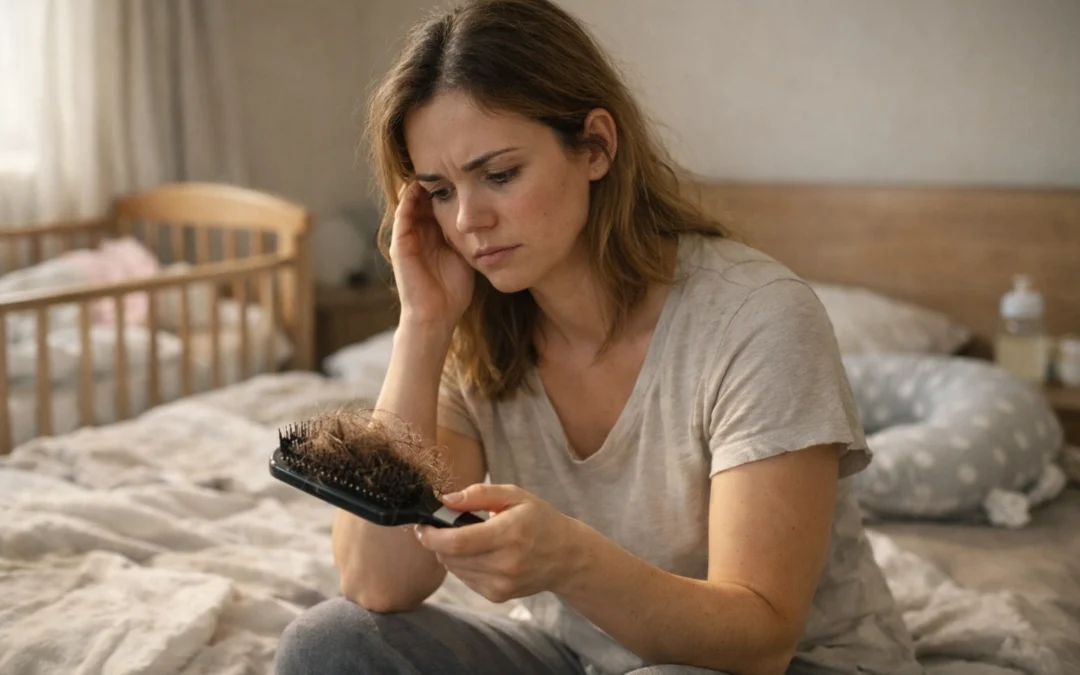
My Real Experience With Postpartum Hair Shedding
Around four months after my daughter was born, I was changing her nappy when I noticed something wrapped around her tiny finger — a strand of my hair, tight enough to leave a red mark.
My heart stopped.
Then I looked around. Hair on her onesie. Hair on the changing mat. Hair stuck to the nursing pillow. Everywhere.
When I ran my fingers through my hair that evening, loose strands came away in my hand. Not one or two. Handfuls.
I panicked.
Was I going bald? Was something medically wrong? Was this a vitamin deficiency from breastfeeding? Should I see a doctor immediately?
But here’s the part no one talks about.
After delivery, I was beyond exhausted. I was healing physically. I was waking every 2–3 hours. I was stressed. I was overwhelmed. I was in pain.
And slowly, I stopped taking care of myself.
I skipped meals. I barely drank water. I didn’t take my vitamins consistently. Everyone’s focus — including mine — was fully on the baby.
Which is natural. But I lost myself in that transition.
When my hair started falling out, it felt like one more thing I couldn’t control.
The next morning, I searched online: “losing so much hair after baby.” That’s when I learned the term: postpartum telogen effluvium — or what most moms just call postpartum hair loss.
Reading the postpartum hair loss timeline for the first time was the reassurance I desperately needed. It told me:
- This starts around 2–4 months postpartum (I was exactly 4 months in)
- It peaks around 4–6 months (I was entering peak phase)
- It’s temporary (this was the most important thing to hear)
Knowing the timeline didn’t stop the shedding. But it stopped the panic.
And that’s when I realized: understanding the medical side was only half the solution. The other half was remembering that I mattered too.
Once I started eating properly again, hydrating, checking my iron levels, and asking for help so I could rest — I didn’t see instant results. But I felt supported. And that changed everything.
If you’re reading this at 2am, holding a hairbrush full of strands and feeling that same panic — this timeline is for you. And so is the reminder that taking care of yourself isn’t selfish. It’s survival.
What Is Postpartum Hair Loss?
Postpartum hair loss — medically known as postpartum telogen effluvium — is temporary excessive hair shedding caused by hormonal shifts after childbirth.
Here’s what happens:
During pregnancy:
- Estrogen levels are high
- Hair stays in the growth phase (anagen) longer than normal
- You shed far less hair than usual (50-100 hairs/day becomes closer to 20-30)
- Your hair feels thicker, fuller, more luxurious
After delivery:
- Estrogen levels drop rapidly (often within 3 days)
- All the hair that should have fallen out during pregnancy enters the shedding phase (telogen) simultaneously
- You can lose up to 300 strands per day during peak shedding (Johns Hopkins Medicine)
The key thing to understand:
You are not losing “new” hair. You are losing delayed pregnancy hair — all the strands that stayed put during those 9 months.
This is not baldness. This is catch-up shedding.
The Complete Postpartum Hair Loss Timeline (Month by Month)
Let me break down exactly what to expect, backed by medical data.
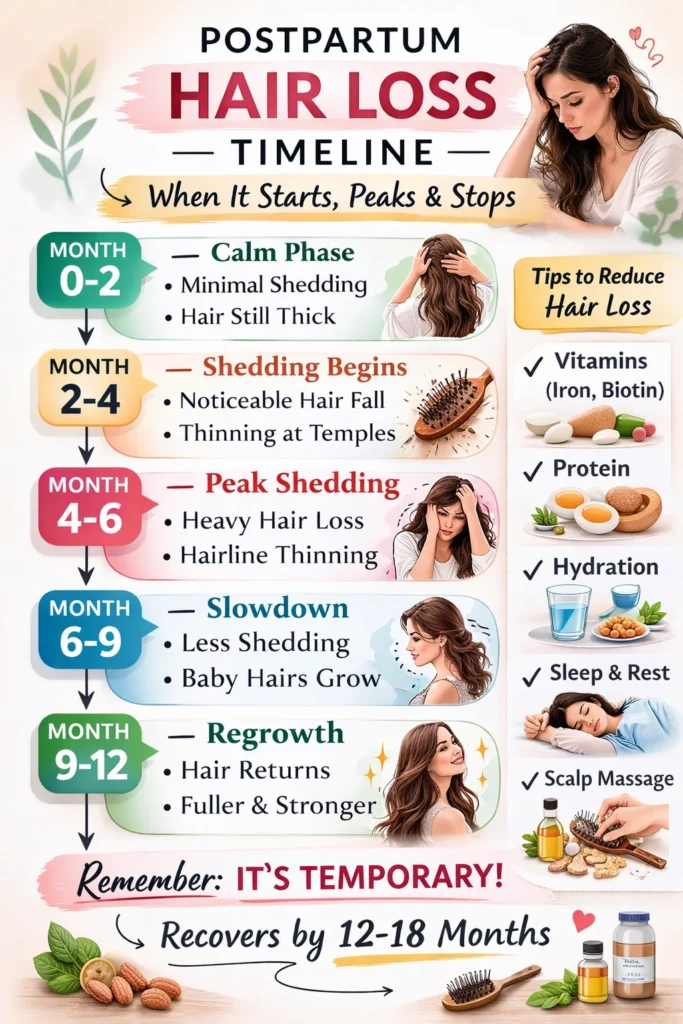
Month 0–2: Minimal Shedding (The Calm Phase)
What’s happening:
- Your hormones are still stabilising after birth
- Hair remains relatively thick
- Shedding is at normal or near-normal levels
- You may not notice any difference yet
What you might see:
- Slightly more hair in your brush than usual (but not alarming)
- Hair still feels full when you tie it back
Postpartum hair loss usually starts about three months after giving birth, as estrogen levels return to their normal levels.
What to do now:
- Continue taking postnatal vitamins (if your doctor recommends)
- Eat protein-rich meals
- Be gentle with hair care — this is prep time
Month 2–4: Shedding Begins (The “Oh No” Phase)
When it typically starts: For most people, postpartum hair loss begins around two to four months after giving birth.
What’s happening:
- The delayed shedding phase kicks in
- Large numbers of hair follicles enter telogen (resting/shedding phase) at once
- Your hairbrush starts filling up noticeably
What you might see:
- Clumps of hair in the shower drain
- Hair on your pillow in the morning
- Loose strands all over your baby’s clothes
- Thinning around temples and hairline
Real mom note: This is the phase where I first noticed hair wrapped around my daughter’s finger. It’s jarring — but it’s the exact time the timeline predicted.
Month 4–6: Peak Shedding (The Hardest Phase)
The peak window: For most women, hair shedding tends to peak around 4-5 months postpartum. This is when you’ll likely see the most noticeable loss of hair, but it’s temporary.
What’s happening:
- Maximum number of hair follicles shedding simultaneously
- You can lose up to 300 hairs per day (versus the normal 50-100)
- Visible thinning, especially at temples and crown
What you might see:
- Dramatic hair loss during washing and brushing
- Postpartum hairline recession (temples look noticeably thinner)
- “Baby hairs” starting to grow in — short, wispy new growth around face
- Volume loss when putting hair up
Emotional reality: This is when it feels worst. You’re probably:
- Still sleep-deprived
- Maybe back at work
- Adjusting to new identity as a mom
- Dealing with other postpartum body changes
Sleep deprivation alone can take a real toll on your body — including your hair. If you’re also struggling with night wakings, you might find this helpful: Newborn Won’t Sleep Unless Held at Night? 9 Gentle Fixes That Work
And now your hair is falling out in clumps.
I remember standing in the shower at 5 months postpartum, watching hair swirl down the drain, and crying. Not because I was vain — but because it felt like one more thing my body was doing that I couldn’t control.
If you’re in this phase right now — I see you. And I promise: this is temporary.
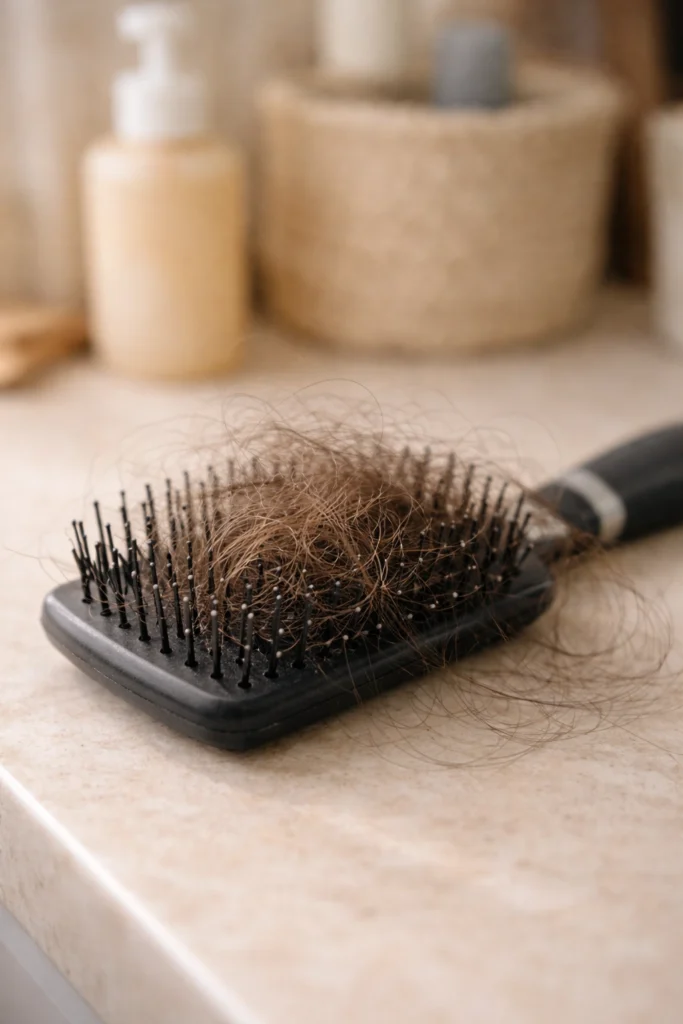
Month 6–9: Slowdown Phase (The Light at the End)
What’s happening: Postpartum hair loss usually ends about 6–12 months after giving birth. Most women see their hair returning to its normal thickness as their hormone levels stabilize.
- Shedding begins to slow noticeably
- Baby hairs (regrowth) become more obvious
- Hair density starts improving gradually
What you might see:
- Less hair in your brush each morning
- Short new growth forming a “halo” around your hairline
- Improved volume when styling
Real mom note: At 7 months postpartum, I remember tying my hair back and realising I wasn’t pulling out 10 strands just from gathering it. That small win felt huge.
Month 9–12: Regrowth & Recovery Phase
The return to normal: Though it may be distressing to lose hair, postpartum hair loss is only temporary. The shedding should last less than six months. Your hair should regain its fullness by the time your child turns one.
What’s happening:
- Shedding returns to normal pre-pregnancy levels (50-100 hairs/day)
- Hair thickness visibly improves
- Regrowth fills in thinning areas
What you might see:
- Near-normal hair density
- Baby hairs now 2-4 inches long
- Hairline looking fuller again
Important note: For most women, postpartum hair loss lasts around 6 months. While shedding tends to peak around 3-5 months postpartum, the regrowth phase can take longer, especially if stress or other factors continue to affect your hair health.
Some moms take up to 18 months to see full density return — and that’s still medically normal.
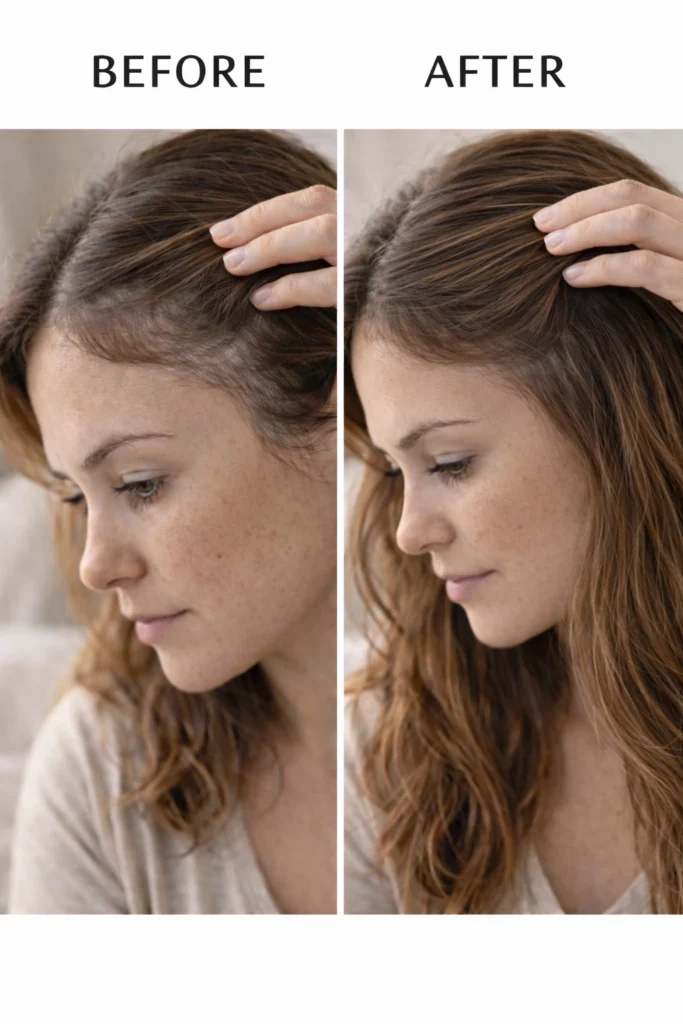
Why Postpartum Hair Loss Feels More Dramatic Than It Is
Here’s what helped me understand this:
You typically have 80,000 to 120,000 hairs on your scalp and shed up to 100 hairs per day. In postpartum hair loss, you lose more than 100 hairs daily.
During pregnancy, you didn’t shed that 50-100 hairs per day. For 9 months, you kept almost all of it.
After birth, your body “catches up” — shedding all the delayed pregnancy hair over just a few months.
So it feels like you’re going bald. But you’re actually just returning to your pre-pregnancy hair volume.
The math:
- 9 months pregnant × 50 hairs/day not shed = ~13,500 “extra” hairs
- Those 13,500 hairs shed over 3-4 months postpartum
- That’s why it looks like so much
You’re not losing abnormal amounts. You’re losing delayed normal amounts.
Is Postpartum Hair Loss Worse If You’re Breastfeeding?
Short answer: No — breastfeeding does not directly cause hair loss.
Yes, breastfeeding can extend the shedding phase due to elevated prolactin levels. This hormone keeps hair in a resting phase, which can lead to prolonged hair loss for breastfeeding moms.
However, what can make shedding appear worse:
- Nutrient depletion — breastfeeding increases your body’s need for iron, protein, vitamins
- Sleep deprivation — chronic poor sleep affects hair health
- Stress — elevated cortisol can worsen shedding
- Iron deficiency — very common postpartum, especially with breastfeeding
If you are breastfeeding:
- Ask your doctor about continuing postnatal vitamins
- Prioritise protein intake (eggs, lentils, Greek yogurt, chicken, nuts)
- Ask your GP to check your iron levels if you feel exhausted
When Is Postpartum Hair Loss NOT Normal?
Most shedding is normal within the postpartum hair loss timeline. But speak to your doctor if:
🚨 Red flags:
- Hair loss continues beyond 12–15 months postpartum
- You notice bald patches (not just thinning)
- You have severe fatigue, weight gain, or cold intolerance (possible thyroid issue)
- You feel dizzy, weak, or short of breath (possible iron-deficiency anemia)
- You have irregular periods or mood changes (possible hormonal imbalance)
Why this matters:
Postpartum thyroiditis affects about 5-10% of women and can cause hair loss that looks like telogen effluvium but won’t resolve on its own. The immune system attacks the thyroid within around 6 months of giving birth, causing temporary thyroid hormone fluctuations.
Iron-deficiency anemia is extremely common postpartum (especially after heavy bleeding or C-section) and directly impacts hair growth.
Both conditions are treatable. Don’t wait — ask for blood tests if you’re concerned.
How to Support Your Hair During the Postpartum Hair Loss Timeline
You cannot completely stop hormone-driven shedding. But you can reduce severity and support regrowth.

How to Support Your Hair During the Postpartum Hair Loss Timeline
You cannot completely stop hormone-driven shedding. But you can reduce severity and support regrowth.
1. Continue Postnatal Vitamins
Many doctors recommend continuing prenatal vitamins or switching to postnatal vitamins for at least 6-12 months after giving birth.
Common nutrients found in postnatal formulas include:
- Iron (especially important after heavy bleeding or C-section)
- Vitamin D
- Zinc
- Biotin (B7)
- B12
- Folate
Important: Always speak with your GP or midwife before starting any new supplements. They can check your individual nutrient levels through blood tests and recommend what’s right for your specific situation. Some supplements can interfere with medications or medical tests.
While biotin is often included in hair supplements, research on its effectiveness for postpartum hair loss specifically is limited. Your doctor can advise whether supplementation is appropriate for you.
2. Increase Protein Intake
Hair is made primarily of a protein called keratin. Adequate protein intake directly supports hair growth.
Aim for protein at every meal:
- Eggs (biotin-rich)
- Lentils and beans
- Greek yogurt
- Chicken, fish
- Nuts and seeds
- Tofu and tempeh
Especially important for:
- Vegetarian/vegan moms
- Breastfeeding moms (higher protein needs)
If you have specific dietary restrictions or concerns, speak with your GP or a registered dietitian for personalized guidance.
3. Check Your Iron Levels
Iron deficiency is one of the most common causes of worsening postpartum hair loss.
Ask your GP to check:
- Ferritin (iron stores)
- Hemoglobin
- Full blood count
Your doctor will interpret your results and advise if iron supplementation is needed. Iron deficiency is very common after childbirth, especially following heavy bleeding or C-section, and treating it can make a significant difference to hair regrowth.
Signs of iron deficiency:
- Extreme fatigue beyond normal new-mom tired
- Dizziness or lightheadedness
- Pale skin
- Shortness of breath
- Heavy menstrual periods (once they return)
4. Gentle Hair Care
Avoid adding mechanical stress to already-shedding hair.
Do:
- Use a wide-tooth comb (not a brush) on wet hair
- Choose volumising shampoo (adds body without weight)
- Sleep on a silk or satin pillowcase (reduces friction)
- Air-dry when possible
Avoid:
- Tight ponytails, braids, or buns
- Heat styling tools (or use low heat + heat protectant)
- Chemical treatments (bleach, perms, relaxers)
- Aggressive brushing
Avoid tight ponytails and braids that can add tension to your hair and lead to more hair loss.
5. Scalp Massage (5 Minutes Daily)
Daily scalp massage:
- Improves blood circulation to hair follicles
- Supports regrowth
- Reduces stress (which itself helps hair health)
How:
- Use fingertips (not nails)
- Apply gentle circular pressure across entire scalp
- 5 minutes daily
- Optional: use natural oil such as coconut oil or diluted rosemary oil (always dilute essential oils in a carrier oil, and avoid if you have sensitive skin or are breastfeeding without checking with your doctor first)
6. Manage Stress (I Know, Easier Said Than Done)
Chronic stress raises cortisol, which worsens hair shedding.
Small stress-management wins:
- 10-minute walks outside
- Deep breathing during feeds
- Asking for help (from partner, family, friends)
- Lower your expectations — you’re in survival mode
Real mom note: At 5 months postpartum, I was so stressed about my hair falling out that the stress itself made it worse. Once I accepted the timeline and stopped obsessing, shedding actually improved.
If you’re also dealing with the stress of returning to work while breastfeeding, read: How Often Should I Pump at Work? 3 Proven Schedules
Postpartum Hairline: The Temple Thinning Problem
Many moms notice:
- Receding temples (hair pulls back in an “M” shape)
- Thin, wispy baby hairs near forehead
- Visible scalp at hairline
This type of thinning is commonly referred to as postpartum hairline thinning and is part of postpartum telogen effluvium. It is temporary and typically improves as hormone levels stabilize.
Good news: It almost always regrows within 6-12 months. The baby hairs you see now? Those are your regrowth already happening.
Avoid:
- Panic-cutting bangs (wait until regrowth fills in)
- Harsh chemical treatments at the hairline
- Tight hairstyles that pull on temples
Patience wins here.
Mistakes That Make Postpartum Hair Loss Worse
From personal experience and medical advice:
❌ Crash dieting or restrictive eating Your body needs calories and nutrients to heal and produce milk. Undereating worsens shedding.
❌ Skipping meals (especially breakfast) Protein at breakfast supports hair growth all day.
❌ Ignoring iron deficiency symptoms This is treatable and makes a massive difference.
❌ Tight hairstyles Adds mechanical stress to already-fragile hair.
❌ Stressing obsessively about shedding Stress itself increases cortisol and worsens hair fall. (I know this is hard. But acceptance helps.)
Expert Guidance From Dermatologists
Key medical points:
- Telogen effluvium is self-limiting — it resolves on its own as hormones stabilise
- Minoxidil (Rogaine) is rarely needed for temporary postpartum shedding
- Nutritional optimisation is more important than topical products
- Regrowth begins once hormone levels stabilise — usually by 6-9 months
If hair loss continues past 12 months, consult a dermatologist or trichologist (hair specialist).
FAQ: Postpartum Hair Loss Timeline
When does postpartum hair loss start?
For most people, postpartum hair loss begins around two to four months after giving birth. This timing corresponds to the natural hair growth cycle adjusting after pregnancy.
When does postpartum hair loss peak?
For most women, hair shedding tends to peak around 4-5 months postpartum. This is when shedding is most noticeable and can feel most distressing.
How long does postpartum hair loss last?
For most women, postpartum hair loss lasts around 6 months. Shedding typically improves by 6-12 months postpartum, with full regrowth visible by 12-18 months.
Will my hair grow back after postpartum shedding?
Yes. In the vast majority of cases, hair regrows fully once hormones stabilise. By your baby’s first birthday, most women notice their hair returning to normal thickness.
Is postpartum hair loss worse with a C-section?
No. Delivery method (vaginal vs. C-section) does not affect the postpartum hair loss timeline. The trigger is hormonal change, not the type of delivery.
Can vitamins stop postpartum hair loss?
Vitamins cannot completely stop hormone-driven shedding, but they can support faster regrowth and reduce severity — especially if you have nutritional deficiencies. Always consult your doctor before starting supplements.
Does cutting my hair help with postpartum hair loss?
No. Cutting your hair does not reduce shedding or speed regrowth. However, a shorter style can make hair appear fuller and is easier to manage with a newborn.
The Emotional Truth Every Mom Needs to Hear
Losing hair after having a baby feels deeply unfair.
Your body just grew and delivered life. You’re running on broken sleep. You’re navigating the hardest transition of your life.
And now your hair is falling out too?
It feels like one more thing you can’t control.
I remember looking in the mirror at 5 months postpartum — hair visibly thinner, dark circles under my eyes, still carrying baby weight — and thinking: When do I get to feel like myself again?
The postpartum hair loss timeline gave me something to hold onto. Not a miracle cure, but a map. A “you are here” marker. A reminder that this phase has an end.
If you’re in the thick of it right now:
- The shedding peaks around 4-6 months
- It starts slowing by 6-9 months
- It improves significantly by 12 months
- Full regrowth often takes 12-18 months
The timeline is temporary — even when it feels endless.
Conclusion: Your Postpartum Hair Loss Timeline
If you’re holding a hairbrush full of strands right now, remember:
- Shedding typically starts at 2-4 months postpartum
- It peaks at 4-6 months (the hardest phase)
- It slows by 6-9 months
- It improves by 12 months
The postpartum hair loss timeline follows a predictable pattern. You are not alone. You are not going bald. This is temporary.
Support your body:
- Continue postnatal vitamins (with your doctor’s guidance)
- Eat protein-rich meals
- Check iron levels if needed
- Be gentle with hair care
- Rest when you can
And most importantly:
Stop staring at the drain. Stop counting the strands. The timeline says this passes — and it will.
You’ve already survived childbirth, sleep deprivation, and learning to keep a tiny human alive.
You can survive this too.
Disclaimer: This post is for general educational purposes only and is not medical advice. Do not start any supplements, vitamins, or treatments without consulting your doctor first. Individual needs vary, and some supplements can interfere with medications or medical tests. For concerns about hair loss or postpartum health, speak with your GP, dermatologist, or healthcare provider.