

- A Real Experience From My Own Family
- Before You Start: A Quick Note
- Why Does My Baby Refuse the Bottle from Dad?
- 7 Tips That Actually Work When Baby Won't Take Bottle From Dad
- What Lactation Consultants Recommend
- Mistakes to Avoid When Baby Won't Take Bottle From Dad
- When to Seek Help
- FAQ: Baby Won't Take Bottle From Dad
- Final Thoughts: You Will Get Through This
You have pumped milk, labelled the bottles, left clear instructions, and headed out the door — and ten minutes later your phone rings. It is dad, sounding defeated, telling you the baby won’t take bottle from dad. Again. The baby is screaming. He is frazzled. And you are standing in a car park or at your desk feeling guilty and helpless.
If this sounds familiar, please know you are in very good company. Bottle refusal from dad is one of the most common feeding challenges in the early months — and it almost always has nothing to do with dad doing anything wrong.
This post will walk you through exactly why it happens, what genuinely works, which mistakes to skip, and which bottles other mums have found make the biggest difference. And before we get into the tips, I want to share something from my own family that made this topic feel very personal to me.
A Real Experience From My Own Family
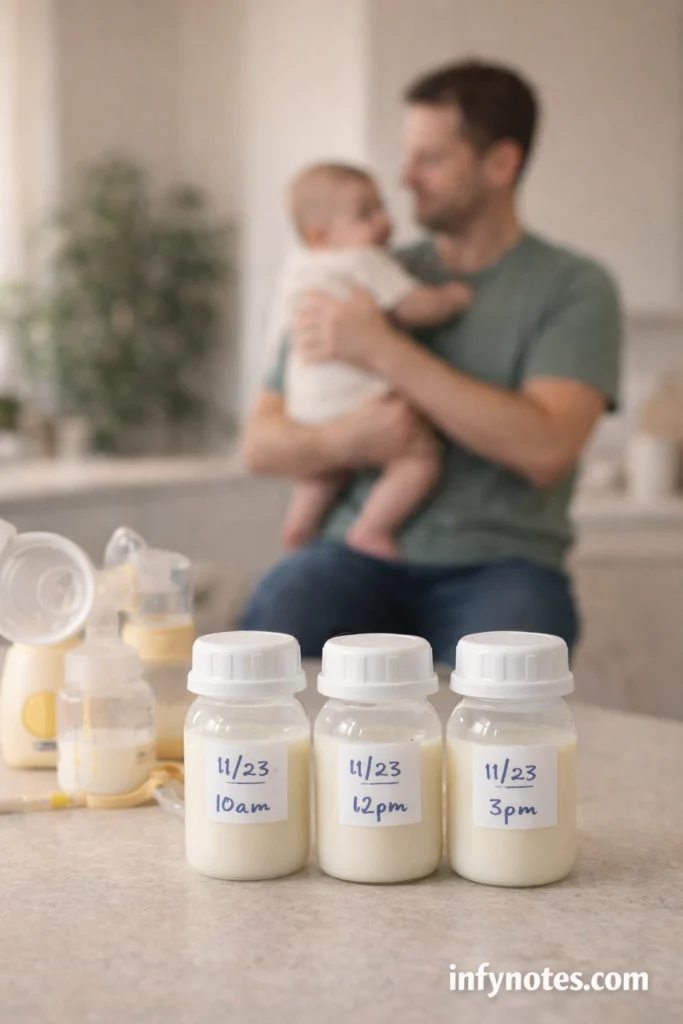
My cousin is a working mum who returned to her job when her baby was around three months old. She could not always be home for daytime feeds, so she used an electric pump to express milk, stored it in the fridge, and gave her husband detailed instructions so he could feed the baby while working from home.
Some feeds went fine. But other times the baby would cry from the first moment dad offered the bottle, push it away, and clearly just want mum. It was stressful for both of them, especially because they were both trying so hard and doing everything “right.”
If your family is going through the same thing right now, this post is for you — and for dad too.
Before You Start: A Quick Note
If your baby is otherwise feeding well and growing normally, bottle refusal from dad is almost always a comfort and familiarity issue — not a sign something is medically wrong. However, if your baby is refusing all feeds, has fewer wet nappies than usual, seems lethargic, or is not gaining weight well, please contact your GP, health visitor, or a certified lactation consultant.
Why Does My Baby Refuse the Bottle from Dad?

Before we jump into the fixes, it helps to understand what is actually going on. From birth, babies are incredibly sensory. They know mum’s smell, mum’s heartbeat, and the way mum holds them. Breastfeeding is not just about milk — it is a full-body experience tied to comfort, warmth, and security.
When dad steps in with a bottle, everything suddenly feels different. The smell is different, the arms feel different, and the rhythm is different. For a baby who is used to feeding at the breast, this can feel genuinely confusing and upsetting — even when the person offering the bottle loves them just as much.
Here are some of the most common reasons behind bottle refusal from dad:
Once you understand the “why,” the solutions start to make a lot more sense.
For more gentle support on introducing a bottle to a breastfed baby, La Leche League International has a helpful guide that many parents find reassuring.
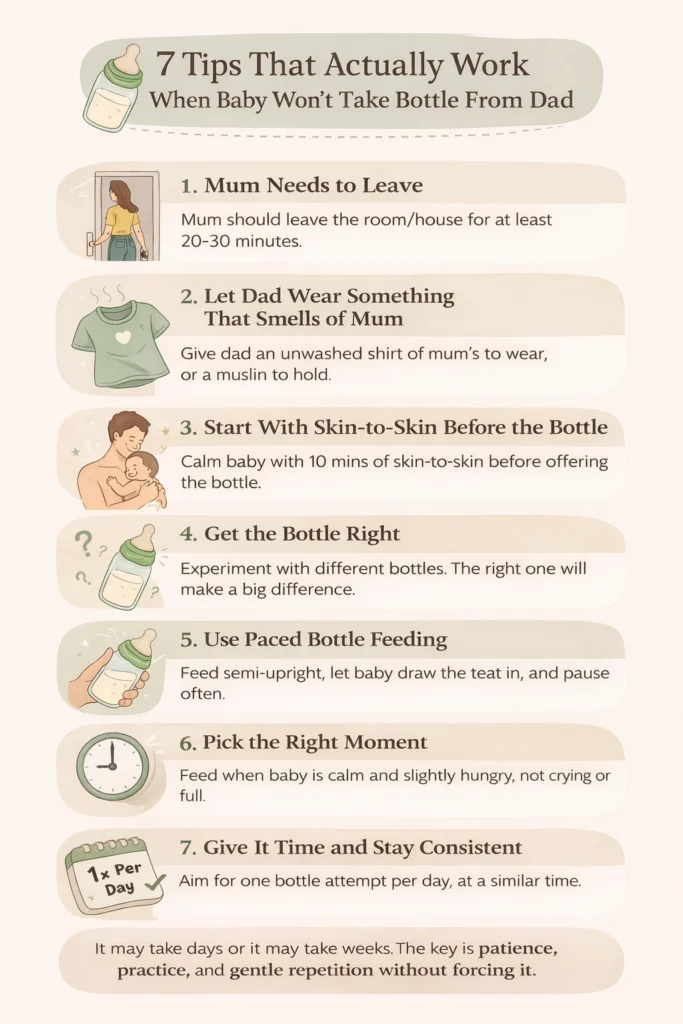
7 Tips That Actually Work When Baby Won’t Take Bottle From Dad
1. Mum Needs to Leave — Properly
This is the single most effective thing you can do, and so many families skip it thinking it is too extreme. It is not. When mum is anywhere in the house, baby can smell her. And if baby can smell mum, baby will scream for the real thing until they get it.
Mum needs to leave the room completely — and ideally go outside or leave the house entirely for at least 20 to 30 minutes. Yes, it feels hard. Yes, you will probably sit in the car listening. But this small change alone is often enough to shift things within a few attempts.
When mum is simply not an option, baby adjusts. Dad gets a real chance. And the bottle often gets accepted.
2. Let Dad Wear Something That Smells of Mum
Scent is everything with young babies. One of the most popular tricks among mums who have cracked this is draping one of mum’s recently worn (unwashed) tops over dad’s shoulder or chest during the feed. The familiar smell can calm baby enough to give the bottle a proper go.
You can also place a small cloth or muslin that smells of mum near baby’s face — not covering the airway, just close enough for baby to catch the scent. It sounds quirky but it genuinely helps.
3. Start With Skin-to-Skin Before the Bottle

Skin-to-skin contact is not just a mum-and-newborn thing. Dad doing five to ten minutes of skin-to-skin with baby before attempting the bottle can make a real difference. It helps baby calm down, get used to dad’s warmth and heartbeat, and feel secure before any feeding even starts.
Think of it as building trust before asking baby to try something new. A settled, calm baby is always more likely to accept a bottle than a tense or distressed one.
4. Get the Bottle Right
Not all bottles work the same way for breastfed babies — and this really matters. If the teat flows too fast, baby gets overwhelmed. If it feels nothing like the breast, baby rejects it. Choosing the right bottle can make a real difference.
Here are some bottles often recommended by lactation consultants and mums of breastfed babies:
- Philips Avent Natural
- Tommee Tippee Closer to Nature
- Medela Calma
- Nanobebe Breastmilk Bottle
- Dr Brown’s Options+
It may take trying two or three different bottles before you find the one that clicks. That is completely normal — and worth persisting through.
5. Use Paced Bottle Feeding
Paced bottle feeding is a technique that slows down the feed so it feels more like breastfeeding. It reduces overwhelm, gives baby more control, and makes the experience feel less foreign. Here is how dad can do it:
- Hold baby in a semi-upright sitting position — not lying flat on their back.
- Hold the bottle horizontally rather than tipping it steeply downward.
- Let baby draw the teat in themselves — do not push it into their mouth.
- Pause every minute or two and let baby rest, just like a natural breastfeed.
- Switch sides halfway through the feed to mimic breastfeeding further.
This technique alone can make a significant difference, especially for babies who have previously struggled with bottles flowing too fast.
6. Pick the Right Moment
Timing matters more than most parents realise. The ideal window for offering a bottle is when baby is calm but slightly hungry — not at the point of screaming, and not right after a breastfeed when baby has no interest.
Watch for early hunger cues: rooting, sucking on fists, turning the head from side to side. That is your window. Step in before the crying starts, and dad has a much better chance.
If your baby is going through the 4-month developmental leap, feeding patterns can become erratic and unsettled. Our post on Sleep Regression 4 Months: 9 Proven Fixes + 7 Signs explains what is happening at this stage and how to manage the disruption to your whole routine.
7. Give It Time and Stay Consistent
This is the tip nobody wants to hear, but it matters most. If dad only tries the bottle once a week, it stays unfamiliar. Aim for at least one bottle attempt per day — ideally at the same time so it becomes part of a predictable routine for baby.
Some babies accept the bottle within three or four days of consistent practice. Others take two to three weeks. Both are normal. The key is gentle, consistent repetition without forcing it.
If you are heading back to work and trying to manage pumping schedules alongside all of this, our guide How Often Should I Pump at Work? A Simple Schedule for Working Moms will help you keep your supply steady while you work through this transition.
Dad’s patience today can become baby’s comfort tomorrow.
What Lactation Consultants Recommend
Feeding specialists consistently offer the following guidance to families dealing with bottle refusal:
- Start bottles between 3 and 6 weeks, if possible. Too early may increase the risk of nipple confusion, while too late can make the switch harder. If you are past that window, do not panic — it may simply take a little more patience.
- Warm the teat under warm water before offering it. A teat at body temperature can feel more natural and less surprising to your baby.
- Never force the bottle in. Always wait for your baby to open their mouth and draw the teat in themselves. Forcing it can create a negative association and make refusal worse.
- Try a different feeding position. Some babies accept the bottle more easily when they are held facing outward or looking away from dad’s face, as this feels less similar to a breastfeeding position.
- Offer a dropped feed first. Replace the feed where mum is usually least available — often mid-morning or mid-afternoon — as the first bottle attempt. Babies may be less expectant of breastfeeding at these times.
For more practical bottle-feeding guidance, including positioning, following your baby’s cues, and helping feeds feel calmer, the NHS has a helpful bottle-feeding advice page.
For more structured feeding guidance by age, our 3-Month Baby Feeding Schedule: The Honest Mom’s Guide lays out what to expect and how to build a workable routine around it.
Mistakes to Avoid When Baby Won’t Take Bottle From Dad
If your baby also struggles with sleep around feeding time, Newborn Won’t Sleep Unless Held at Night? 9 Gentle Fixes That Work shares gentle approaches that complement your feeding routine without adding more stress.
When to Seek Help
Most cases of bottle refusal resolve with time. But contact your health visitor, GP, or lactation consultant if:
- Baby is losing weight or not gaining as expected
- There are fewer wet nappies than usual (fewer than 6 in 24 hours for a young baby)
- Baby is refusing all feeds, not just the bottle from dad
- You suspect tongue tie, reflux, or a sensory issue affecting feeding
There is no shame in asking for professional support. Feeding challenges are hard, and you deserve real help — not just internet reassurance.
FAQ: Baby Won’t Take Bottle From Dad
How long does it take if my baby won’t take bottle from dad?
It varies between families. If your baby won’t take bottle from dad, some babies come around within three to five days of consistent daily attempts, while others take two to three weeks of gentle practice. What matters most is regularity — one attempt per day, at a similar time, in a calm setting.
Do I need to stop breastfeeding to get my baby to take the bottle?
No — absolutely not. The goal is for your baby to be comfortable with both. Stopping breastfeeding is not necessary and would affect your milk supply. Many babies breastfeed happily while also accepting bottles from dad once they get used to it.
What should I do if my baby won’t take bottle from dad or anyone else?
If your baby won’t take bottle from dad or from anyone else, try a different bottle shape and teat material — sometimes it is one specific combination that works. For babies over four months, a soft-spouted sippy cup or an open cup can also be worth trying. If your baby is very young and refusing all bottle feeds consistently, speak to a lactation consultant, as there may be an underlying factor like tongue tie or oral sensitivity.
Is it normal if my baby won’t take bottle from dad?
Yes, it is completely normal if your baby won’t take bottle from dad. Breastfed babies are deeply used to the feel, flow, and scent of feeding from the breast. A bottle is genuinely different in every sensory way, so some resistance is expected, especially at first. It is not a sign that something is wrong. It is often a sign that your breastfeeding bond is strong.
Can dad give a bottle at night?
Yes, and many families find night feeds a brilliant opportunity for dad to take over with a bottle. It gives mum a longer sleep stretch and helps dad and baby build their own bond. Start with an early evening feed before attempting middle-of-the-night — let baby adjust gradually.
Will going back to work make bottle feeding from dad easier?
Often, yes. Once mum is reliably away during the day and baby understands that mum is not an option, most babies adapt to bottle feeding from dad far more readily. Routine helps enormously.
Final Thoughts: You Will Get Through This
If your baby won’t take bottle from dad right now, please hear this: it is not permanent, it is not a failure, and it does not mean something is wrong with your baby or your partner.
I think about my cousin and her husband a lot when this topic comes up. Those early weeks of standoffs and tears and frantic phone calls felt enormous at the time. But slowly, feed by feed, dad and baby found their rhythm. Dad got more confident. Baby got more comfortable. And what felt impossible became just… normal.
That is what usually happens when a baby won’t take bottle from dad. It often takes more time, patience, and repetition than anyone expects.
Be patient with dad. Be patient with baby. And most importantly, be patient with yourself — because managing feeding, pumping, working, and all of the emotions that come with early parenthood is genuinely hard work, and you are doing it.
Try the tips in this post. Find the right bottle. Give mum-free time to dad and baby. And trust that this phase will pass.
One feed at a time. You have got this.